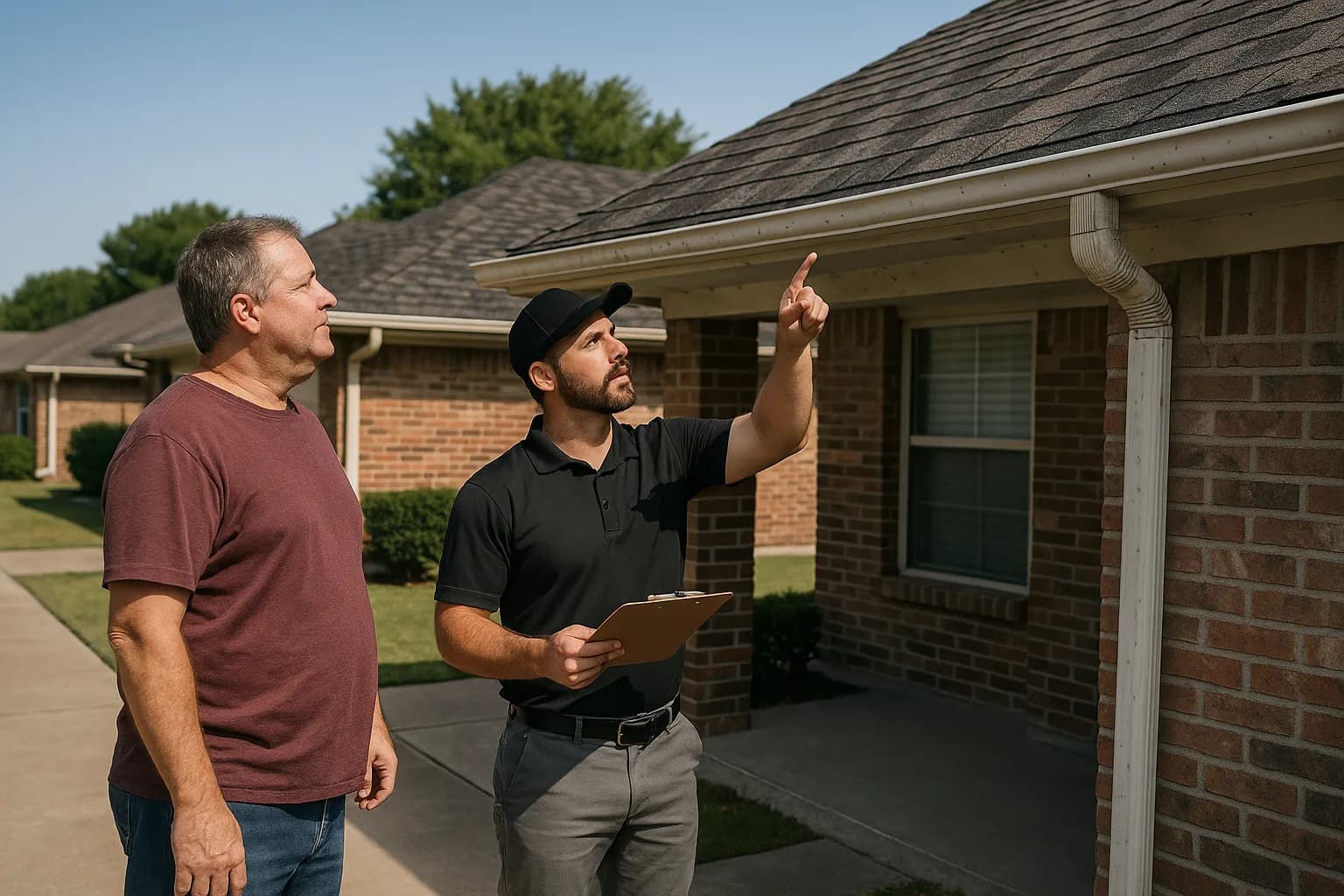
Texas Roof Insurance Claim Guide: Step-by-Step for Hail & Storm Damage
Texas leads the nation in hail damage claims. Between percentage-based deductibles, tight filing deadlines, and aggressive adjusters, navigating a roof insurance claim in the Lone Star State requires a specific playbook. This guide walks you through every step — from documenting damage to negotiating your settlement.
Updated March 2026 · Covers DFW, Houston, San Antonio, Austin & all TX markets
Get an instant roof replacement quote — see what your new roof would cost
Texas Insurance Claims Are Different
If you have filed a homeowners insurance claim in another state, forget what you know. Texas operates under a fundamentally different framework for wind and hail damage claims. Understanding these differences before you pick up the phone can save you thousands of dollars and months of frustration.
Three things that make Texas claims unique:
1. Percentage-Based Wind/Hail Deductibles
Most states use flat-dollar deductibles ($500, $1,000, $2,500). Texas insurers use percentage-based deductibles for wind and hail claims — typically 1% or 2% of your dwelling coverage amount. On a home insured for $400,000, that means your out-of-pocket deductible is $4,000 to $8,000 before insurance pays a single dollar. This is not optional; it is written into virtually every Texas homeowners policy issued in the last decade.
2. Strict Filing Deadlines
While most Texas policies allow up to one year to file a claim after the date of loss, a growing number of carriers have shortened their windows to 90 or 180 days. Some policies even require “prompt notice” without specifying a deadline, which gives the insurer discretion to deny late-filed claims. The Texas Department of Insurance (TDI) requires insurers to acknowledge claims within 15 days and make a decision within 15 business days of receiving all documentation.
3. TDI Oversight and the Texas Prompt Payment Act
Texas has some of the strongest consumer protection laws for insurance claims in the country. The Texas Prompt Payment of Claims Act (Chapter 542 of the Insurance Code) requires insurers to accept or deny a claim within specific timeframes and pay interest penalties if they drag their feet. TDI actively investigates complaints and can fine insurers for bad-faith claim handling. These protections give Texas homeowners leverage that homeowners in many other states do not have.
Key takeaway: The combination of high percentage deductibles and strict deadlines means you need to act quickly and strategically. The steps below are designed specifically for how Texas claims work.
Document Everything
Before you call your insurance company, before you call a contractor, document the damage yourself. Your phone camera is your most powerful tool in the first 24 hours after a storm. Insurance adjusters arrive days or weeks later; by then, evidence can degrade, and the insurer can argue that damage occurred after the storm event.
Do not climb on your roof. Ground-level and attic-level evidence is what establishes that hail hit your property, the approximate size of the hailstones, and the direction of impact. This corroborating evidence is just as important as the roof damage itself when it comes to proving your claim to the insurer.
What to photograph and video (from ground level):
Gutters and downspouts
Hail dents on metal gutters establish that hail hit your property and indicate approximate hail size.
AC unit and outdoor equipment
Dented AC fins and condenser tops are powerful evidence of hail size and force of impact.
Window screens and siding
Torn or punctured window screens and dented vinyl siding corroborate roof-level hail damage.
Vehicles parked outside
Hail damage on car hoods and roofs shows impact direction and size, supporting your claim.
Attic interior (if safe)
Look for daylight through the decking, water stains, or active leaks. Photograph with flash.
Fence tops and mailbox
Soft-metal surfaces like fence post caps and mailbox tops show hail impact clearly.
Timing matters
Take photos within 24-48 hours of the storm event. Make sure timestamps are visible in your phone’s photo metadata. If possible, save a screenshot of the weather radar or a local news report confirming the storm date and severity in your area. This creates an undeniable timeline that your insurer cannot dispute.
Get a Professional Roof Inspection
After documenting ground-level evidence, hire a trusted local roofer to inspect your roof before you call your insurance company. This is not the same as having the insurer send their adjuster. Your contractor works for you; the adjuster works for the insurance company. The order matters enormously.
Hail damage on an asphalt shingle roof is often invisible from the ground. Adjusters call these “hail bruises” — soft spots where the hail impact has fractured the fiberglass mat beneath the granule surface. These bruises do not look like obvious dents or holes. They look like subtle dark circles where granules have been displaced, and they dramatically shorten the remaining lifespan of the shingle. A trained roofer knows exactly where to look and how to document these impacts for your claim.
In the DFW metroplex, where hailstorms can affect millions of homes in a single event, insurers rely on statistical modeling to estimate damage patterns. Having your own contractor’s inspection establishes the specific damage to your roof, rather than leaving your claim at the mercy of an algorithm or an overwhelmed adjuster who spends 20 minutes on your property.
What a professional inspection should include:
Chalk-circle marking of each hail impact on shingles, photographed with a ruler for scale
Test square count — industry standard is counting impacts within a 10′ × 10′ test square on each roof slope
Ridge cap, hip, and valley inspection — these high-exposure areas take the most damage and are often missed by adjusters
Flashing, boot, and vent assessment — metal components show hail dents more clearly than shingles and corroborate damage
Written report with photos — this becomes your primary evidence when the adjuster arrives
How to vet your inspector
Use a locally established contractor with verifiable reviews and a physical business address in your metro area. Do not use a door-knocker who showed up after the storm. Texas has no state roofing license, which makes vetting even more critical. Check our storm chaser scam guide to learn the red flags.
File Your Claim
Once you have your professional inspection report in hand, call your insurance company directly. Do not let your contractor file the claim for you. Texas law allows contractors to assist with the claims process, but the first notice of loss should come from you, the policyholder. This establishes you as the decision-maker and prevents the insurer from characterizing the claim as contractor-driven.
When you call, you will speak to a claims representative who will open a file, assign a claim number, and schedule an adjuster visit. Keep detailed notes of every conversation: the date, time, the representative’s name, and what was discussed. Follow up every phone call with an email summarizing the conversation. This paper trail protects you if the insurer later disputes what was agreed upon.
What to say when you call:
“I’m calling to report wind and hail damage to my roof from the storm on [date]. I have documented damage to my gutters, siding, and roof. I have had a professional inspection and I have a written report. I would like to file a claim and schedule an adjuster visit.”
Do reference the specific storm date — this ties your claim to a documented weather event
Do mention you have a professional inspection report — this signals you are prepared and informed
Do ask for your claim number and the name of your assigned adjuster
Do not accept a phone-only or virtual adjustment — insist on an in-person roof inspection
Do not give a recorded statement without understanding that it can be used to limit your claim
Watch your deadlines
Check your policy declarations page for your specific filing deadline. While the standard is one year from the date of loss, policies from carriers like USAA, Allstate, and several Texas regional insurers have moved to 90-day or 180-day windows. Missing your deadline means an automatic denial — no exceptions, no appeals. File as soon as you have your contractor’s inspection report.
The Adjuster Visit
After you file your claim, the insurance company will send an adjuster to inspect your roof. This is the most important meeting in the entire claims process. The adjuster’s report directly determines how much money the insurer offers you. Being prepared for this visit can mean the difference between a fair payout and a lowball offer that leaves you thousands of dollars short.
After a major DFW hailstorm, insurance companies are processing thousands of claims simultaneously. They bring in independent adjusters from out of state who may have limited experience with Texas building codes or local pricing. These adjusters are often incentivized to close files quickly and keep payouts low. Your preparation counterbalances this pressure.
How to prepare for the adjuster:
Have your contractor present
Your roofer knows where to find damage and can point it out to the adjuster in real time. Many adjusters spend only 30-45 minutes on a roof; your contractor can direct their attention to the most critical areas and ensure no slope is skipped.
Share your documentation
Give the adjuster copies of your ground-level photos, your contractor’s inspection report, and any weather data you have saved. This establishes the timeline and full scope of damage.
Take your own photos during the visit
Document what the adjuster inspects and what they skip. If they do not climb the roof at all or skip entire slopes, note it. This is critical evidence if you need to dispute their findings later.
Request the adjuster’s report
You have the right to a copy of the adjuster’s inspection report and Xactimate estimate. Request it in writing if it is not provided automatically. You need this to prepare a supplement.
After the adjuster leaves, you will receive a written estimate from your insurer, usually within 5-15 business days. Under the Texas Prompt Payment Act, the insurer must accept or deny your claim within 15 business days of receiving all requested information. If the offer seems low — and in Texas, initial offers are frequently below actual repair costs — the next step is the supplement process.
Negotiate and Supplement
The initial offer from your insurer is rarely the final number. In Texas, the supplement process is how experienced contractors and homeowners close the gap between what the insurer offers and what the repair actually costs. This is not adversarial — it is how the system is designed to work. Most experienced Texas roofers submit supplements on a majority of their insurance jobs because adjusters consistently miss items.
The supplement process, step by step:
1. Compare the adjuster’s estimate to your contractor’s estimate
Line by line, identify what the adjuster missed or underpriced. Common gaps include: missing code-required items (drip edge, ice and water shield in valleys), undervalued labor rates, omitted slopes, and skipped components like pipe boots, ridge vents, and step flashing.
2. Prepare and submit the supplement
Your contractor prepares a detailed supplement package with photographs, measurements, and an Xactimate estimate showing the additional line items. This is submitted to the insurer’s claims department with a cover letter explaining each disputed item and referencing the applicable building code or manufacturer specification.
3. Request a re-inspection if needed
If the insurer disputes the supplement, you can request a re-inspection with a different adjuster. Your contractor should be present for the re-inspection to walk the new adjuster through the damage. In Texas, the insurer must respond to supplement requests within the same Prompt Payment Act timelines as the original claim.
Real example: Fort Worth homeowner fights a lowball offer
A Fort Worth homeowner received an initial insurance payout of $8,200 for a hail-damaged roof after a spring 2025 storm. The actual replacement cost, including code upgrades required by the city of Fort Worth, was $18,400. The homeowner’s contractor submitted a supplement documenting six additional damaged slopes the adjuster had not inspected, missing drip edge replacement, and underlayment that did not meet current Fort Worth building code requirements. After a re-inspection and two rounds of negotiation, the insurer approved $17,100 — more than double the original offer. The entire supplement process took six weeks.
When to consider a public adjuster
If your insurer denies the supplement or the gap between their offer and actual costs exceeds $5,000-$10,000, consider hiring a Texas-licensed public adjuster. Public adjusters are licensed by TDI and work exclusively for policyholders, not insurance companies. They typically charge 10% of the settlement and have deep experience with Xactimate pricing, insurer negotiation tactics, and the Prompt Payment Act. For claims under $10,000, the 10% fee may not justify the cost. For claims above $15,000 with a stubborn insurer, the investment often pays for itself several times over.
Choose Your Contractor
Once your claim is approved and you have a settlement in hand, it is time to choose the contractor who will actually do the work. If you used a trusted local roofer for your initial inspection (Step 2), and they handled the supplement process professionally, they are likely a strong candidate. But you should still compare quotes to ensure you are getting fair value.
Why you should NOT use your insurer’s preferred contractor
When your insurer recommends a contractor, that contractor has a pre-negotiated relationship with the insurance company. They have agreed to lower labor rates and may use the least expensive materials that technically satisfy the claim. Their financial incentive is to keep the insurer happy (so they keep getting referrals), not to maximize the quality of your roof. In Texas, you have the absolute legal right to choose any contractor you want. Exercise that right.
How to vet a Texas roofing contractor:
Verify insurance: $1M+ general liability and active workers’ compensation. Call the carrier directly to confirm the policy is current — do not accept a photocopy of an insurance card.
Check local permits: Texas has no state roofing license, but Dallas, Fort Worth, Houston, San Antonio, and Austin all require local contractor registration and building permits for roof replacements.
Confirm local establishment: Physical office or warehouse in your metro area, not a P.O. box or out-of-state address. Search the address on Google Maps to verify it exists.
Read reviews across platforms: Google, BBB, Yelp, and Facebook. Look for a consistent history spanning years, not a sudden burst of recent 5-star reviews that appeared after the last storm.
Get a written contract: Specifying manufacturer, product line, color, warranty terms, payment schedule, and start/completion dates. No handshake deals.
Getting instant quotes through RoofVista lets you compare standardized estimates from pre-vetted local contractors who have already passed our insurance, reference, and background checks. Every contractor on our platform handles the supplement process and fights for the full scope of your repair.
Understanding Your Texas Deductible
The wind/hail deductible is the single biggest financial surprise Texas homeowners face during the claims process. Unlike a standard $1,000 or $2,500 deductible, your wind/hail deductible is calculated as a percentage of your dwelling coverage amount. Here is what that looks like in practice for homes at different coverage levels:
| Dwelling Coverage | 1% Deductible | 2% Deductible |
|---|---|---|
| $250,000 | $2,500 | $5,000 |
| $350,000 | $3,500 | $7,000 |
| $400,000 | $4,000 | $8,000 |
| $500,000 | $5,000 | $10,000 |
| $600,000 | $6,000 | $12,000 |
For many Texas homeowners, especially in the $400,000-$600,000 home value range common in DFW suburbs like Frisco, McKinney, Allen, Keller, and Southlake, the deductible alone can be $4,000 to $12,000. This means the total roof replacement cost must exceed your deductible before insurance pays anything. If your roof replacement costs $15,000 and your deductible is $8,000, insurance pays only $7,000.
Some Texas homeowners choose a 2% deductible to lower their annual premium. This saves $200-$500 per year but doubles your out-of-pocket exposure when you file a claim. In hail-prone areas like north Texas, a 1% deductible is almost always the better financial decision despite the higher premium, because the probability of needing to file a hail claim during your policy term is significant.
Deductible buyback programs are ILLEGAL in Texas
If a contractor offers to “cover your deductible,” “waive your deductible,” or “absorb your deductible,” they are proposing an illegal act. Texas Insurance Code Section 27.155 prohibits contractors from paying, waiving, or rebating any portion of the policyholder’s deductible. Violators face criminal penalties, and the homeowner can be implicated in insurance fraud. If someone offers this, walk away immediately and report them to TDI at 1-800-252-3439.
Storm Chaser Red Flags
Texas is ground zero for storm chaser roofing scams. Because Texas has no state-level contractor licensing requirement, out-of-state crews can set up shop with minimal barriers. After every major hailstorm in the DFW metroplex, Houston, or San Antonio, hundreds of storm chasers flood affected neighborhoods within hours. The National Insurance Crime Bureau ranks Texas among the top states for roofing fraud every year. Here are the warning signs:
Unsolicited door knocking
Legitimate local roofers are busy after storms serving existing customers. Door-knockers arrive from out of state within hours.
No local address
P.O. box, out-of-state address, or no address at all. No local investment means no accountability when the work fails.
Offers to “handle” your claim
A contractor who wants to negotiate with your insurer directly may be inflating the claim and putting you at legal risk.
Offers to cover your deductible
Illegal in Texas under Insurance Code Section 27.155. Anyone offering this is willing to break the law on day one.
Pressure to sign immediately
“This price is only good today.” Legitimate contractors understand you need time to compare quotes and review contracts.
Large upfront deposit
Demanding 50%+ upfront before materials are ordered or work begins is a major warning sign of a fly-by-night operation.
For a comprehensive deep dive into storm chaser tactics, how they operate, and how to protect yourself, read our Storm Chaser Scam Guide. Texas homeowners are particularly vulnerable because of the lack of state licensing, so extra vigilance is essential.
TDI Resources for Texas Homeowners
The Texas Department of Insurance (TDI) is the state regulatory body that oversees all insurance activity in Texas. They are your ally when an insurer acts in bad faith, delays your claim, or offers an unreasonably low settlement. TDI has enforcement authority and actively investigates consumer complaints. Here are the resources every Texas homeowner should know about:
Storm Damage Resources
TDI’s official storm damage guide for homeowners, including claim filing procedures and your rights under Texas law.
File a Complaint
File a complaint against your insurer if they delay, deny, or lowball your claim without proper justification.
Understanding Your Policy
TDI guide to reading your homeowners policy, including deductible types, coverage limits, and exclusions.
Choosing a Roofing Contractor
TDI’s tips for selecting a legitimate contractor after storm damage, including what to look for in a contract.
TDI Consumer Helpline
Call 1-800-252-3439 (Monday-Friday, 8 AM - 5 PM CT) for help with insurance questions, claim disputes, or to file a complaint. TDI staff can explain your policy, mediate disputes between you and your insurer, and investigate bad-faith claim handling practices.
Frequently Asked Questions
How long do I have to file a roof insurance claim in Texas after a hailstorm?
Most Texas homeowners insurance policies require you to file a claim within one year of the date of loss. However, some policies have shortened this window to 90 or 180 days. Check your policy declarations page for your specific deadline. Filing sooner is always better because evidence of damage degrades over time, making it harder for adjusters to attribute damage to a specific storm event.
What is a wind/hail deductible and how is it different from a regular deductible?
A standard homeowners deductible is a flat dollar amount (e.g., $1,000 or $2,500). A wind/hail deductible in Texas is a percentage of your dwelling coverage, typically 1% or 2%. On a home insured for $400,000, a 2% wind/hail deductible means you pay the first $8,000 out of pocket on any wind or hail claim. This percentage-based deductible applies only to wind and hail damage; other covered perils (fire, theft, water damage from burst pipes) still use your standard flat deductible.
Can my insurance company deny my roof claim if I waited too long to report damage?
Yes. If you miss your policy deadline for filing a claim, your insurer can deny it outright. Even if you file within the deadline, waiting months weakens your claim because the insurer can argue that subsequent weather events, normal wear, or lack of maintenance caused or worsened the damage. Document damage immediately after a storm and file promptly.
What is the supplement process and when should I use it?
A supplement is a request to your insurance company for additional funds when the original claim payout does not cover the actual cost of repairs. Your contractor identifies additional damage or necessary work that the adjuster missed, documents it with photos and itemized estimates, and submits it to the insurer. Supplements are common and legitimate. Most experienced Texas roofers handle supplements as part of their normal process.
Is it legal for a contractor to pay my deductible in Texas?
No. In Texas, it is illegal for a contractor to waive, pay, rebate, or absorb your insurance deductible. This is sometimes called a "deductible buyback." It violates Texas Insurance Code Section 27.155 and can be prosecuted as insurance fraud. Both the contractor and homeowner can face penalties. Any contractor offering to cover your deductible is breaking the law and should be avoided.
Should I hire a public adjuster for my Texas roof claim?
A public adjuster can be valuable if your claim is large, your insurer is disputing coverage, or the initial payout is significantly below repair costs. Public adjusters in Texas are licensed by TDI and typically charge 10% of the claim settlement. For straightforward hail damage claims where you have a trusted contractor who handles supplements, a public adjuster may not be necessary. For complex or disputed claims exceeding $15,000, the investment often pays for itself.
Why does my insurer want to use their preferred contractor?
Insurers recommend contractors because they have negotiated lower labor and material rates with those companies. While these contractors may be competent, they are financially incentivized to keep costs low for the insurer, not to maximize the quality or scope of your repair. In Texas, you have the legal right to choose any licensed contractor. Your insurer cannot require you to use their preferred vendor.
What should I do if my insurer offers a lowball settlement?
Do not accept the first offer if it does not cover the actual cost of repairs. Get a detailed, line-item estimate from your own contractor. Have your contractor prepare a supplement with photo documentation of all damage and an Xactimate estimate (the software insurers use). Submit the supplement to your insurer and request a re-inspection. If the insurer still refuses, you can file a complaint with TDI, hire a public adjuster, or consult an attorney who specializes in insurance disputes.
Related Resources
Get Instant Quotes from Pre-Vetted Texas Contractors
Every contractor on RoofVista has passed our insurance, reference, and background checks. Compare quotes from verified local roofers who handle the supplement process and fight for every dollar your policy covers.
Get Instant Roof Replacement QuotesFree estimate — enter your address to start. No spam. No shared leads.
Frequently Asked Questions
How long do I have to file a roof insurance claim in Texas after a hailstorm?
Most Texas homeowners insurance policies require you to file a claim within one year of the date of loss. However, some policies have shortened this window to 90 or 180 days. Check your policy declarations page for your specific deadline. Filing sooner is always better because evidence of damage degrades over time, making it harder for adjusters to attribute damage to a specific storm event.
What is a wind/hail deductible and how is it different from a regular deductible?
A standard homeowners deductible is a flat dollar amount (e.g., $1,000 or $2,500). A wind/hail deductible in Texas is a percentage of your dwelling coverage, typically 1% or 2%. On a home insured for $400,000, a 2% wind/hail deductible means you pay the first $8,000 out of pocket on any wind or hail claim. This percentage-based deductible applies only to wind and hail damage; other covered perils (fire, theft, water damage from burst pipes) still use your standard flat deductible.
Can my insurance company deny my roof claim if I waited too long to report damage?
Yes. If you miss your policy deadline for filing a claim, your insurer can deny it outright. Even if you file within the deadline, waiting months weakens your claim because the insurer can argue that subsequent weather events, normal wear, or lack of maintenance caused or worsened the damage. Document damage immediately after a storm and file promptly.
What is the supplement process and when should I use it?
A supplement is a request to your insurance company for additional funds when the original claim payout does not cover the actual cost of repairs. Your contractor identifies additional damage or necessary work that the adjuster missed, documents it with photos and itemized estimates, and submits it to the insurer. Supplements are common and legitimate. Most experienced Texas roofers handle supplements as part of their normal process.
Is it legal for a contractor to pay my deductible in Texas?
No. In Texas, it is illegal for a contractor to waive, pay, rebate, or absorb your insurance deductible. This is sometimes called a "deductible buyback." It violates Texas Insurance Code Section 27.155 and can be prosecuted as insurance fraud. Both the contractor and homeowner can face penalties. Any contractor offering to cover your deductible is breaking the law and should be avoided.
Should I hire a public adjuster for my Texas roof claim?
A public adjuster can be valuable if your claim is large, your insurer is disputing coverage, or the initial payout is significantly below repair costs. Public adjusters in Texas are licensed by TDI and typically charge 10% of the claim settlement. For straightforward hail damage claims where you have a trusted contractor who handles supplements, a public adjuster may not be necessary. For complex or disputed claims exceeding $15,000, the investment often pays for itself.
Why does my insurer want to use their preferred contractor?
Insurers recommend contractors because they have negotiated lower labor and material rates with those companies. While these contractors may be competent, they are financially incentivized to keep costs low for the insurer, not to maximize the quality or scope of your repair. In Texas, you have the legal right to choose any licensed contractor. Your insurer cannot require you to use their preferred vendor.
What should I do if my insurer offers a lowball settlement?
Do not accept the first offer if it does not cover the actual cost of repairs. Get a detailed, line-item estimate from your own contractor. Have your contractor prepare a supplement with photo documentation of all damage and an Xactimate estimate (the software insurers use). Submit the supplement to your insurer and request a re-inspection. If the insurer still refuses, you can file a complaint with TDI, hire a public adjuster, or consult an attorney who specializes in insurance disputes.